
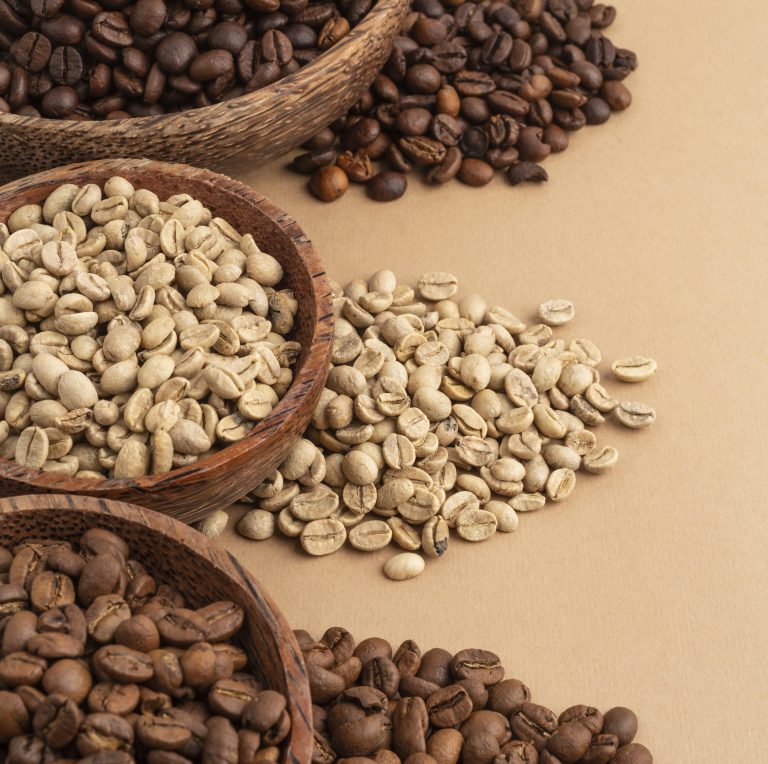
Coffee is enjoyed around the world, but its journey from a regional crop to a global drink took centuries. Where did it begin, how did it spread, and how do its main species differ? This article follows coffee’s history and introduces Arabica, Robusta and two less common types.
1. An Ethiopian legend: the discovery of coffee
According to a well-known story, an Ethiopian goatherd named Kaldi noticed that his goats became energetic after eating the red fruit of a particular tree, around the ninth century. He tried the fruit himself and noticed its stimulating effect. The story says that monks at a nearby monastery later made a drink from the fruit to help them stay awake during night prayers. This is a legend rather than a documented account, but Ethiopia is central to coffee’s early history.
2. How coffee spread around the world
Coffee reached Yemen, where it became popular among Sufi communities in the fifteenth century. The port of Mocha developed into an important center of coffee trade, sending beans through the Islamic world and eventually to Europe. By the seventeenth century, coffeehouses had appeared in European cities such as Venice and Paris. Dutch traders cultivated coffee commercially in Indonesia, and cultivation later expanded through the Americas. Today Brazil, Colombia, Vietnam, Ethiopia and India are among the major producers.
3. The main coffee species
More than 120 Coffea species have been described, but the global market is dominated by Arabica (Coffea arabica) and Robusta (Coffea canephora). Their different growing conditions and bean chemistry help explain the range of flavors in coffee.
Arabica: aromatic and nuanced
- Arabica accounts for a large share of world production, often estimated at roughly 60–70%.
- It commonly offers more pronounced acidity and complex fruit or floral notes.
- It is often grown at higher elevations, around 900–2,500 meters.
- Its caffeine content is generally lower than Robusta’s.
- Major producers include Brazil, Colombia, Ethiopia, Kenya, Yemen and Costa Rica.
Common uses: filter methods such as V60, Chemex and French press, as well as specialty espresso.
Robusta: strong and full-bodied
- Robusta accounts for much of the rest of commercial coffee production.
- It often has more bitterness, heavier body and more caffeine than Arabica.
- It can be grown at lower elevations and is relatively resistant to some pests.
- Major producers include Vietnam, Indonesia, India, Brazil and Uganda.
Common uses: strong espresso blends, instant coffee and many commercial blends.
Less common types: Liberica and Excelsa
Liberica originated in West Africa and is also grown in the Philippines, Malaysia and Indonesia. Its large beans can produce distinctive smoky or woody notes. Excelsa, often classified within Liberica, is grown in parts of Southeast Asia and may bring tart, fruity complexity to blends. Both are less common than Arabica and Robusta.
4. Comparing the coffee types
| Characteristic | Arabica | Robusta | Liberica | Excelsa |
|---|---|---|---|---|
| Typical growing elevation | 900–2,500 m | Up to about 800 m | Often low elevation | Varies by region |
| Flavor tendency | Sweet, fruity, lively acidity | Bitterer, earthy, fuller body | Smoky, woody, spicy | Tart, light, fruity |
| Caffeine tendency | Lower | Higher | Varies | Varies |
| Example origins | Brazil, Colombia, Ethiopia | Vietnam, Indonesia, India | Philippines, Malaysia | Southeast Asia |
These are broad tendencies, not guarantees. Variety, terroir, processing and roasting can change the taste of any individual lot.
5. Conclusion: a coffee for every taste
Try Arabica if you enjoy sweetness, fruit and acidity. Choose Robusta or an Arabica–Robusta blend when you want a stronger cup with more body. Explore Liberica or Excelsa for unusual flavor experiences. Tasting coffees from different origins and processing methods is the best way to find your preference.

No comments yet.